AI Consulting Services: How to Turn Workflow Chaos Into Measurable Automation
AI Consulting Services: How to Turn Workflow Chaos Into Measurable Automation
Most companies do not have an artificial intelligence problem. They have a process problem that AI suddenly makes visible. Teams drown in manual handoffs, duplicate data entry, and decision bottlenecks that nobody documented because everyone was too busy keeping the lights on. When leadership finally asks why operations feel slow despite new tools, the honest answer is usually that the workflow itself was never designed for scale. This is where AI consulting services earn their keep: not by selling a model, but by mapping how work actually moves through the business and finding the specific points where automation creates measurable relief.
A good consultant does not start with a technology pitch. They start with a workflow trace. They follow a single request from intake to completion, note every touchpoint, every waiting period, and every place a human copies information from one system to another. Only then does it become clear whether AI can help, and if so, where. This article walks through what modern AI consulting looks like in practice, how to evaluate providers, and what a realistic implementation roadmap should contain.
Why AI Consulting Is Different From Traditional IT Advice
Traditional IT consulting focuses on infrastructure, integration, and stability. AI consulting adds a layer of uncertainty because model behavior is probabilistic, not deterministic. A database query returns the same answer every time. A language model might classify the same support ticket differently depending on phrasing, context, or temperature settings. That difference changes everything about how you plan, test, and deploy.
Effective consultants therefore spend as much time on evaluation design as on model selection. They define what “good enough” means for each task, build test sets from real historical data, and measure precision and recall against business outcomes rather than technical benchmarks. They also plan for failure modes: what happens when confidence drops below a threshold, when an input falls outside the training distribution, or when the model produces a plausible but wrong answer.
This is why the best AI consulting engagements look less like a software implementation and more like an operations audit with a technical appendix. The deliverable is not a chatbot. It is a clearer understanding of where human judgment is essential and where it is simply expensive habit.
The Workflow Audit: The Step Most Companies Skip
Before any automation is built, a structured audit should answer four questions. First, what triggers the process? Second, what decisions are made along the way, and by whom? Third, where does information change format or system? Fourth, what does a successful outcome look like in numbers?
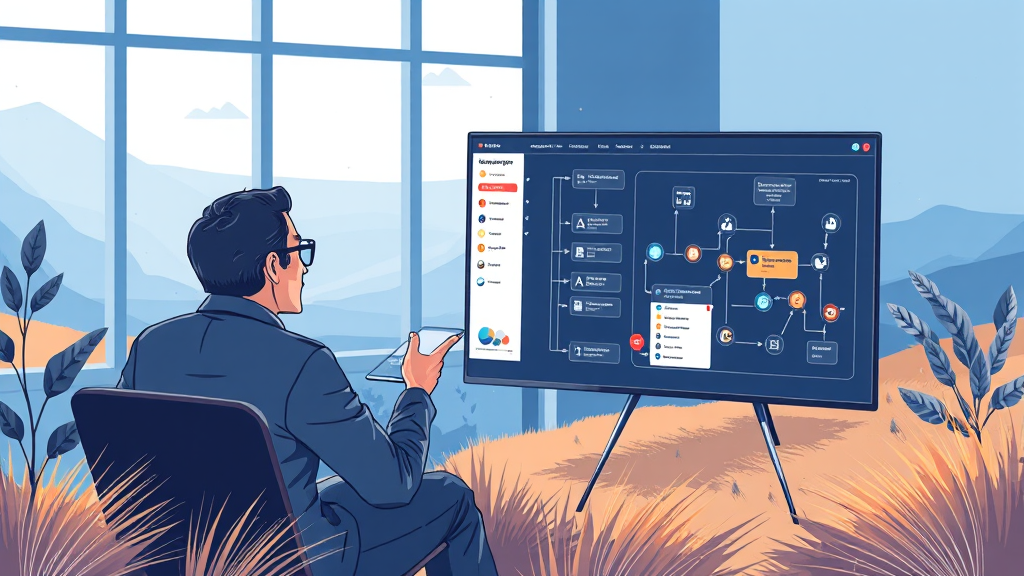
A practical audit typically produces a workflow map with three layers. The top layer shows the business process in plain language. The middle layer shows the systems involved: CRM, ERP, ticketing platform, spreadsheets, email. The bottom layer shows the data objects that move between them. Once this map exists, opportunities become obvious. Repetitive classification tasks are strong candidates for AI. So are summarization, extraction from unstructured documents, and routing decisions based on natural language.
Tasks that involve negotiation, relationship management, or ambiguous trade-offs are weaker candidates. A consultant’s job is to separate the two categories honestly, even when the client wants everything automated at once.
What a Realistic Implementation Roadmap Looks Like
After the audit, a credible roadmap usually follows a phased structure. Phase one is a single high-value workflow, chosen because it is repetitive, measurable, and low-risk. Phase two expands to adjacent processes that share data or users. Phase three addresses cross-functional orchestration, where AI begins coordinating between departments rather than just assisting within one.
Each phase should include three elements: a baseline metric, a target metric, and a rollback plan. Without a baseline, you cannot prove improvement. Without a target, you cannot decide when to stop tuning. Without a rollback plan, you cannot deploy with confidence.
Consultants who skip these elements tend to deliver demos rather than systems. Demos impress in meetings. Systems survive contact with real users, real edge cases, and real quarterly targets.
Common Mistakes Companies Make With AI Vendors
The first mistake is buying a platform before defining a problem. Platforms are flexible, which sounds like an advantage until you realize flexibility without direction produces expensive experimentation. The second mistake is treating AI as a replacement for process design. If a workflow is broken, automating it simply produces broken output faster.
The third mistake is ignoring the human side of adoption. Even a well-built automation fails if the people using it do not trust it, understand it, or know how to override it. Good consulting includes change management: training, documentation, feedback loops, and clear escalation paths.
The fourth mistake is measuring activity instead of outcomes. Number of models deployed, number of prompts written, number of integrations built. None of these matter if cycle time, error rate, or cost per transaction does not improve.
How to Evaluate an AI Consulting Provider
Ask for a sample workflow audit, not a slide deck about capabilities. Ask how they handle evaluation, monitoring, and drift. Ask what happens after the engagement ends. The strongest providers build internal capability so clients are not permanently dependent on outside help.
Also examine their definition of success. If every conversation ends with a recommendation to buy more licenses, that is a sales motion, not a consulting practice. A genuine advisor will sometimes recommend not automating a process at all, because the volume is too low, the risk is too high, or a simpler rule-based solution would work better.
Finally, look for evidence of cross-functional experience. AI rarely stays inside one department. A consultant who has only worked in marketing may struggle with supply chain constraints. One who has only worked in engineering may underestimate customer support realities. Breadth matters more than depth in the early stages.
Where AI Consulting Delivers the Fastest Returns
The fastest returns usually come from three areas. The first is document-heavy intake: invoices, applications, contracts, and forms that currently require manual reading and keying. Extraction and classification models can reduce handling time dramatically while improving consistency.
The second is internal knowledge retrieval. Employees waste hours searching for policies, past decisions, or technical specifications. A well-scoped retrieval system grounded in company documents reduces that waste without requiring a full redesign of existing tools.
The third is triage and routing. Support tickets, sales leads, and service requests all benefit from automated categorization and prioritization. These tasks are repetitive, text-based, and easy to measure, which makes them ideal starting points.
Notice that none of these require exotic technology. They require careful scoping, clean data, and disciplined evaluation. That is the unglamorous reality of successful AI adoption.
Building Internal Capability Alongside the Automation
The best consulting engagements leave the client stronger, not more dependent. That means documenting decisions, training internal champions, and creating simple playbooks for future projects. It also means establishing a lightweight governance process so new automations are reviewed for risk, privacy, and compliance before deployment.
Governance does not have to be bureaucratic. A one-page checklist covering data sensitivity, failure impact, and human oversight is often enough to prevent the most common problems. The goal is to make responsible experimentation easy, not to create approval bottlenecks.
Frequently Asked Questions About AI Consulting Services
How long does a typical AI consulting engagement last?
Most initial engagements run between four and twelve weeks, depending on the complexity of the workflow and the quality of available data. A focused audit and pilot can often be completed in under two months.
Do we need clean data before starting?
Not perfectly clean data, but you do need access to real examples of the process. Part of the consultant’s job is to assess data quality and identify what needs improvement before scaling.
Will AI replace our existing team?
In most cases, automation handles repetitive tasks while people focus on exceptions, relationships, and judgment calls. The goal is capacity, not headcount reduction.
How do we measure whether the investment paid off?
Define baseline metrics before starting: cycle time, error rate, cost per transaction, or customer satisfaction. Compare those numbers after deployment and adjust the scope based on what the data shows.
Final Thoughts
AI consulting is not about chasing the newest model. It is about understanding how work flows through your organization and applying automation where it genuinely helps. The companies that succeed treat it as an operations discipline, not a technology purchase. They audit first, pilot narrowly, measure honestly, and expand only when the evidence supports it. That approach is slower at the start and far faster overall.
Readers who are interested in this topic will benefit from exploring multiple perspectives and understanding the nuanced approaches that industry leaders recommend. Taking time to research thoroughly ensures better outcomes and more informed decision-making.
Those looking to gain deeper knowledge in this area should consider following expert analysis, staying updated with the latest developments, and engaging with professional communities where these topics are discussed in detail.
A comprehensive understanding of this subject requires looking at both theoretical foundations and practical applications. By combining study with hands-on experience, learners can develop a well-rounded perspective that serves them well in real-world scenarios.
As the landscape continues to shift and evolve, staying informed about emerging trends and best practices becomes increasingly valuable. This ensures you remain competitive and capable of adapting to new challenges as they arise.