A Morning With Two Passports: What Vanuatu Dual Citizenship Looks Like in Practice
A Morning With Two Passports: What Vanuatu Dual Citizenship Looks Like in Practice
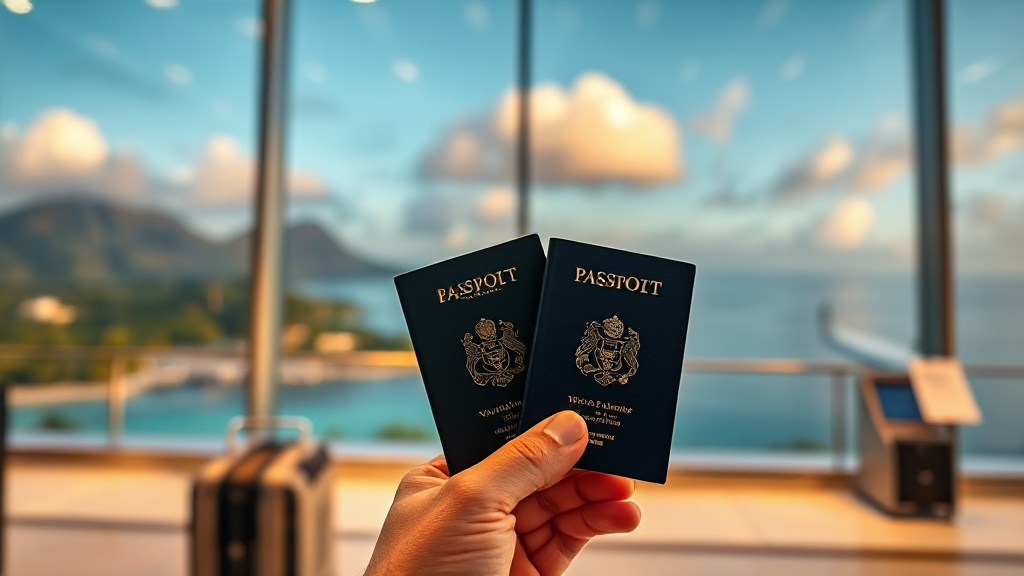
By the end of this piece you will have a clear picture of what a real working day looks like when you actually hold a Vanuatu second passport alongside your original one. Not a brochure version. The version where you are standing at a check-in desk at 6:40 in the morning, holding two small booklets, deciding which one to hand over, and quietly hoping you understood the rules correctly. I have been living this routine long enough to know where the friction points are, and I want to walk you through the requirements first, then the procedure, then the checks that keep everything clean.
If you are starting from zero, the single most useful resource I found early on was https://vanuatudualcitizenship.com/, because it lays out the rules, the renunciation question, tax implications and the visa-free list in plain language rather than legal boilerplate. That matters when you are trying to build a routine you can repeat without second-guessing yourself every time you travel.
What You Actually Need Before the Routine Works
Requirements come first because the rest of the day depends on them. If your documents are wrong, no amount of smooth airport choreography saves you. Here is what my own setup looks like, and what I would tell anyone assembling theirs.
The core requirement is a valid Vanuatu passport, which you obtain through the citizenship programme rather than through ancestry or residency in the usual sense. The application process involves identity documents, police clearances, proof of funds, and a due diligence review. That review is not a formality. It is the reason the passport carries the weight it does, and it is also the reason you should never treat the timeline as something you can rush by a week because a trip came up.
The second requirement is a decision about your original citizenship. This is where most people freeze. Vanuatu does not force you to renounce your existing nationality, but your home country may have its own view. The United States, for example, permits dual nationality, though it comes with paperwork expectations around travel and tax filing. Other countries are stricter. Before you build any routine around two passports, you need to know which category you fall into, because that single fact changes how you present yourself at borders for years afterward.
The third requirement is the least glamorous and the most important: a filing habit. Dual citizenship is not a one-time event. It is a recurring administrative relationship. Passports expire. Tax positions shift. Bank questionnaires arrive. If you do not have a place where you track renewal dates, reporting obligations and the specific entry rules of the countries you visit most, you will eventually have a bad morning. I keep a single document with four columns: document, expiry, next action, and who to contact. That is the whole system. It has saved me more than any clever travel hack.
One more requirement that people underestimate is understanding the visa-free list as it applies to you specifically, not as it appears in a headline. Vanuatu’s passport opens a meaningful number of destinations, but the value depends entirely on where you actually go. If you fly the same three routes every year, study those three routes. A long list of countries you will never visit is not a benefit. It is decoration.
The Procedure, Start to Finish, as It Plays Out in Real Life
Now the procedure. This is the part I can describe almost minute by minute, because after a few years it becomes muscle memory.
It starts the night before. I check which passport I am travelling on for that specific trip. This is not a trivial step. Some itineraries are cleaner on one document than the other, and some countries want to see the passport you used to enter when you leave. I write the choice on a sticky note and put it with the tickets. Sounds childish. It prevents the 5 a.m. fog from making a decision for me.
At the airport, the check-in agent asks for a passport. I hand over the one I selected. If the agent pauses, it is almost always because the booking name and the document need a second look, not because anything is wrong. I have learned to stay quiet and let them work. Volunteering the existence of a second passport at this stage creates confusion rather than clarity. One document, one transaction.
Immigration is different. Depending on the country, you may be asked whether you hold another nationality. I answer honestly and briefly. The mistake people make is treating the question as an invitation to explain their entire life story. It is not. A short, factual answer is almost always the end of it.
The arrival side is where the routine pays off. Because I know in advance which passport I entered on, I know which one to present on departure. Mismatches here are the single most common self-inflicted problem for new dual citizens. If you enter on one document and try to leave on another without a clear reason, you invite questions you do not need.
Banking and administrative life follow the same logic. When a financial institution asks for citizenship information, I disclose both, consistently, every time. Consistency is the whole game. The moment your answers start varying between institutions, you create a paper trail that takes months to unwind. I would rather spend ten extra minutes on a form today than three weeks explaining myself later.
Tax procedure deserves its own paragraph because it is where the day-to-day and the annual collide. Holding a Vanuatu passport does not automatically change your tax residency, and it does not erase obligations to your original country. If you are a US citizen, you file as you always have, regardless of which passport is in your drawer. The second passport is a travel and contingency tool, not a switch that turns off reporting. Anyone who tells you otherwise is selling something. I confirm my position with a qualified advisor once a year, and I treat that conversation as a requirement, not a luxury.
The renewal cycle is the last procedural piece. Vanuatu passports have a validity period, and renewals take time. I start the process well before the expiry date, not because it is complicated, but because travel plans have a way of appearing at the worst moment. The same goes for any supporting documents that need updating. A routine is only as strong as its weakest renewal.
Then there are the checks, which is where I would spend my attention if I were starting over.
Check one: name consistency. Your name must match across passports, tickets, bank records and any visa applications. A middle name omitted in one place and present in another is a small thing that becomes a large thing at a border. Fix it before it fixes your plans.
Check two: entry and exit pairing. Keep a simple log of which passport you used for each trip. It takes thirty seconds and eliminates an entire category of problems. I use a note on my phone with the date, country, and document used. That is it.
Check three: the visa-free list, rechecked annually. Rules change. Countries adjust their entry requirements, and a destination that was straightforward two years ago may now ask for something extra. I review my most-used routes once a year and confirm nothing has shifted.
Check four: your home country’s rules. This is the check people skip because it is uncomfortable. Whether you can hold two passports, how you must travel, and what you must report are all determined by your original country, not by Vanuatu. Know your own rules cold.
Check five: your records. Keep copies of your application documents, your approvals, and your renewal paperwork in one place, ideally both digital and physical. When an institution asks for proof of something five years from now, you will be grateful you did not rely on memory.
The honest summary of my morning routine is that it is boring. That is the point. The people who struggle with dual citizenship are usually the ones who treated it as a dramatic life change rather than an administrative one. The people who glide through it built small habits early and repeated them. Requirements, then procedure, then checks. Do those three in order, and the day you are standing at the check-in desk with two passports in your bag, you will not be nervous. You will just be early.